In Praise of the Nonic!
Beer sommelier Sophie Atherton shares why cask ale tastes better from a nonic pint glass
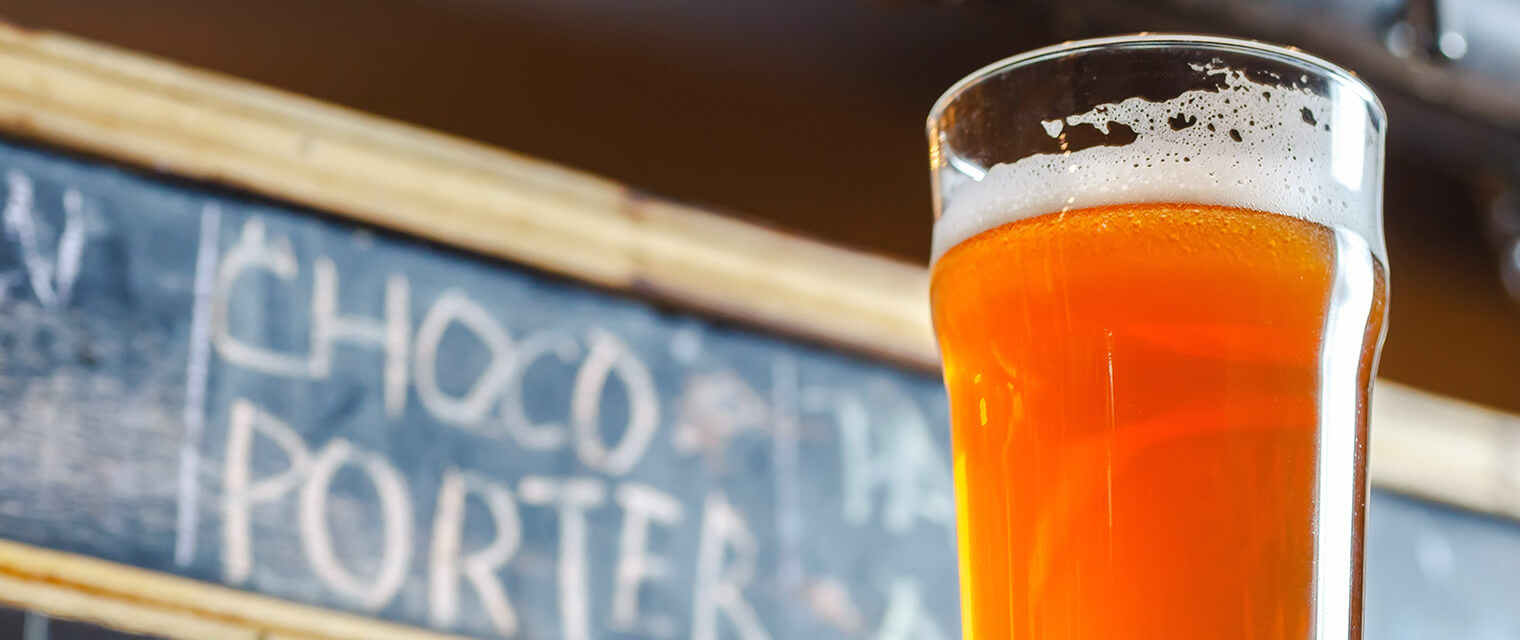
If I’d been a child prodigy, I would have liked to be a tiny artist making still life paintings of pub garden scenes. Perhaps I would have invented a whole genre of these late 1970s and early 80s beer garden tables. A typical one would have featured a tin tray (that my father had carried the drinks out on), my mum’s brown glass bottle of light ale and half pint glass to pour it into, bags of Golden Wonder crisps, chunky ridged Pepsi bottles with red and white striped straws sticking out and the evocatively-shaped pint glass – straight but flaring gently towards the top with a funny bump about an inch from the rim.
In the late summer sunshine, as a child-artist who was then ignorant of beer, I would have tried to capture the light shining through the chestnut-coloured liquid unaware of how it might impair the beer’s flavour.
This is in fact one of my earliest memories of the so-called nonic pint glass. Filled with some sort of best bitter to be quaffed by my Dad on holiday, probably somewhere in the Westcountry by the sea. Sometimes it would be a dimpled pint glass with a handle, but when I became a beer drinker myself it was nonics that were the norm.
An evening at the pub was always a festive affair. An opportunity to dress up a little, to socialise, to listen to the music of a band or a juke box. Every Friday night was like a party and the host served us cask ale in nonics. Ruddles Best, or sometimes County, and later Wadworth 6X were the beers I first used to drink regularly. I forget the precise ABVs, but they were in the 4% range. Session beers that contributed to the party atmosphere but rarely resulted in drunkenness. Exactly what cask ale is all about.
I understood then, as I do now, that the flavours in cask ale were not going to please everyone but they delighted me. They were complex, by which I meant that they weren’t one-dimensional. They had depth and it was enhanced by the nonic glass which may be why I noticed them so much. This was also part of the reason why I didn’t routinely roll in drunk on a Friday night. A couple of pints, perhaps two-and-a-half, the half always a top up into the nonic pint glass, were sipped and savoured and lasted the whole night.
While others downed pints of lager at a far faster rate than me and my real ale, I was tasting a little caramel, a lot of biscuittyness, sometimes a touch of fruitcake, and always a lip-smacking, dry finish – which I used to think of as my beer ‘having good-bite’. Even before the era of guest and golden ales, the flavours within cask beer were sophisticated, without being toffee-nosed. The only downside really was that pubs did not as a rule sell cheese and biscuits that would have partnered these dark, often fruity, ales so well.
Returning to the art theme, I see in my mind’s eye, that pub I used to always go to on a Friday night in my teens, with its rich cast of characters, including the landlord always smart in a shirt and tie, whose cry at the end of the night was, “Come on now, you sods! Drink up!”. The backdrop was one of dark wood beams and railings and exposed brick walls and a sparsely decorated back room with a tiled floor. In it was a pew-like bench and a black table where I used to place my nonic pint glass of cask ale and watch the comings and goings of all the other patrons. If only I could recreate it on canvas now.
There is actually a connection between art and the nonic glass. It is said to have been designed for Lancashire glassworks, Ravenhead, by Alexander Hardie Williamson (1907 – 1994) who trained and taught at the Royal College of Art. As well as being a designer, he also painted watercolours. I wonder if he ever painted a pub scene – and if it included one of his own glasses?
For some reason the nonic fell out of fashion and has largely been replaced by the shaker pint glass, which is a similar shape but without the bump. It is a sturdier vessel but lacks the charm of the nonic. It would be disproportionate to blame the shaker pint glass for a decline in cask ale sales and perhaps I am just being nostalgic, like George Orwell pining for pink china beer mugs in his essay about the perfect pub, but the nonic had character in a way that most modern pint glasses do not. Serving beer in appropriately branded glassware may be best practice, but for a pint of cask ale I’d rather a classic, unbranded nonic every time.

More Articles
All Articles